October 19th marks another anniversary of the death of Julio Argentino Roca, a military officer and two-time President of Argentina, whose career had a decisive influence on the political, economic, and institutional organization of Argentina in the late 19th century.
Born in San Miguel de Tucumán on July 17th, 1843, Roca began his military career at a young age and participated in conflicts such as the Battles of Cepeda and Pavón and the War of the Triple Alliance. In 1879, as Minister of War, he led the Desert Campaign, an operation that consolidated Argentine sovereignty over Patagonia and allowed for the expansion of the national territory.
Roca served as President of Argentina on two occasions: from 1880 to 1886 and from 1898 to 1904. During his first term, he promoted the federalization of Buenos Aires, monetary unification, and the expansion of the railway and port infrastructure. Under the slogan “Peace and Administration”, he fostered institutional stability and economic growth amid expanding international trade and an influx of European immigrants.
During his second term in office, Roca further advanced the modernization of the state: he established mandatory military service, reorganized the Armed Forces, and strengthened Argentina’s international role. He also reinforced the country’s presence in Antarctica, affirming Argentina’s sovereign claim over that strategic territory.
After completing his second term, he remained involved in public life through diplomatic activities in Brazil and Europe. He died in the City of Buenos Aires on October 19th, 1914, at the age of 71.
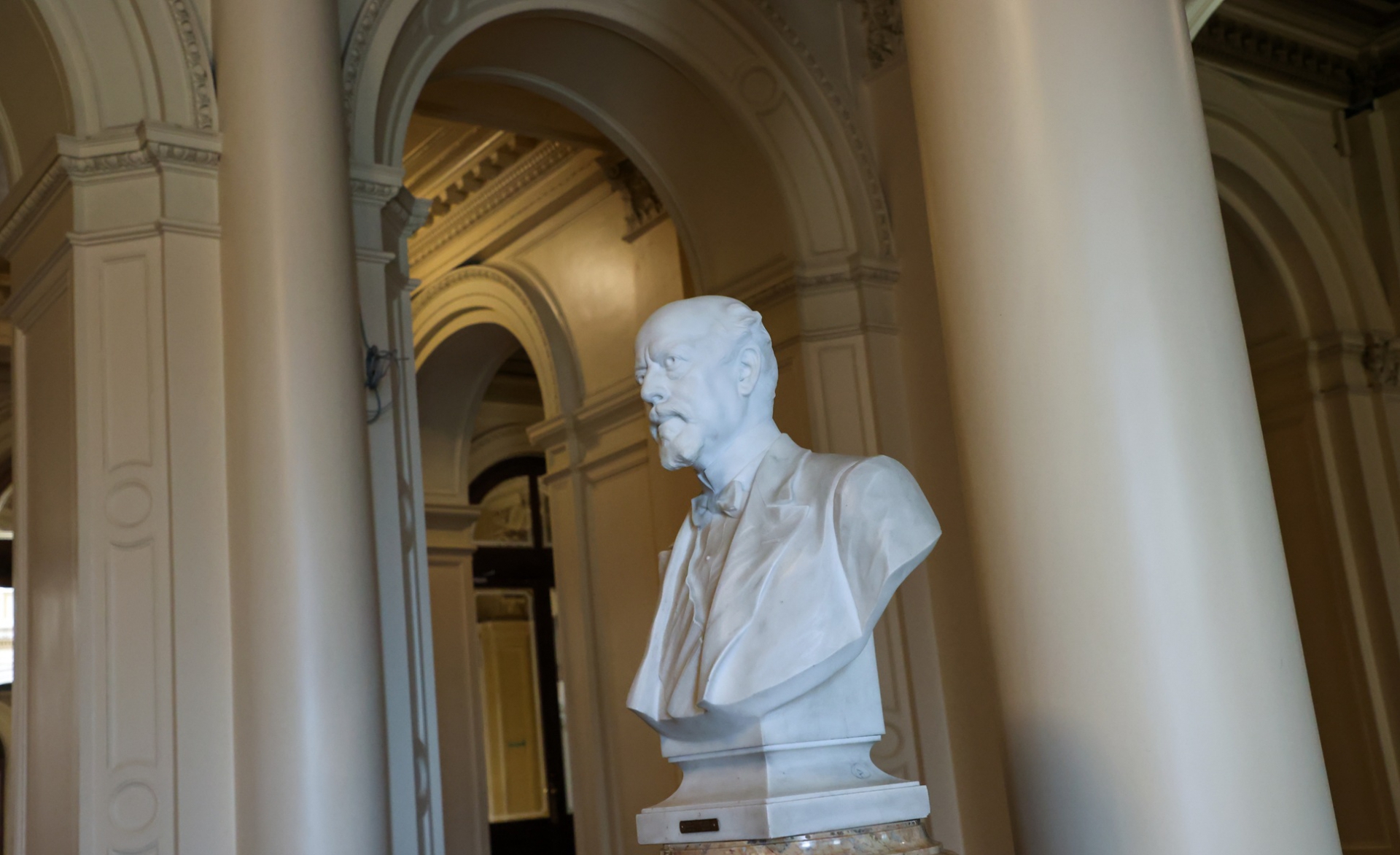
His legacy lives on at the Casa Rosada, where a bust is displayed in the Hall of Honor, a portrait hangs in the Hall of National Heroes, and a work by Rafael Del Villar, created in 1937, is housed in the Casa Rosada Museum.
112 years after his death, Julio Argentino Roca occupies a prominent place among the nation’s heroes due to his leading role during a decisive period in Argentine history. His legacy is an integral part of the construction of the modern state and the transformations that defined the country’s course.