On September 24, 1812, the Battle of Tucumán was fought—a pivotal event in Argentine history in which the Army of the North, under the command of General Manuel Belgrano, succeeded in halting the advance of the royalist forces led by Brigadier Pío Tristán at a critical moment for the patriotic cause.
Following the Exodus from Jujuy, the Army of the North marched more than 360 kilometers to reach Tucumán. The people of Jujuy had abandoned their lands to deprive the enemy of resources, while upon arriving in Tucumán territory, the troops found support from a population committed to the struggle for independence.
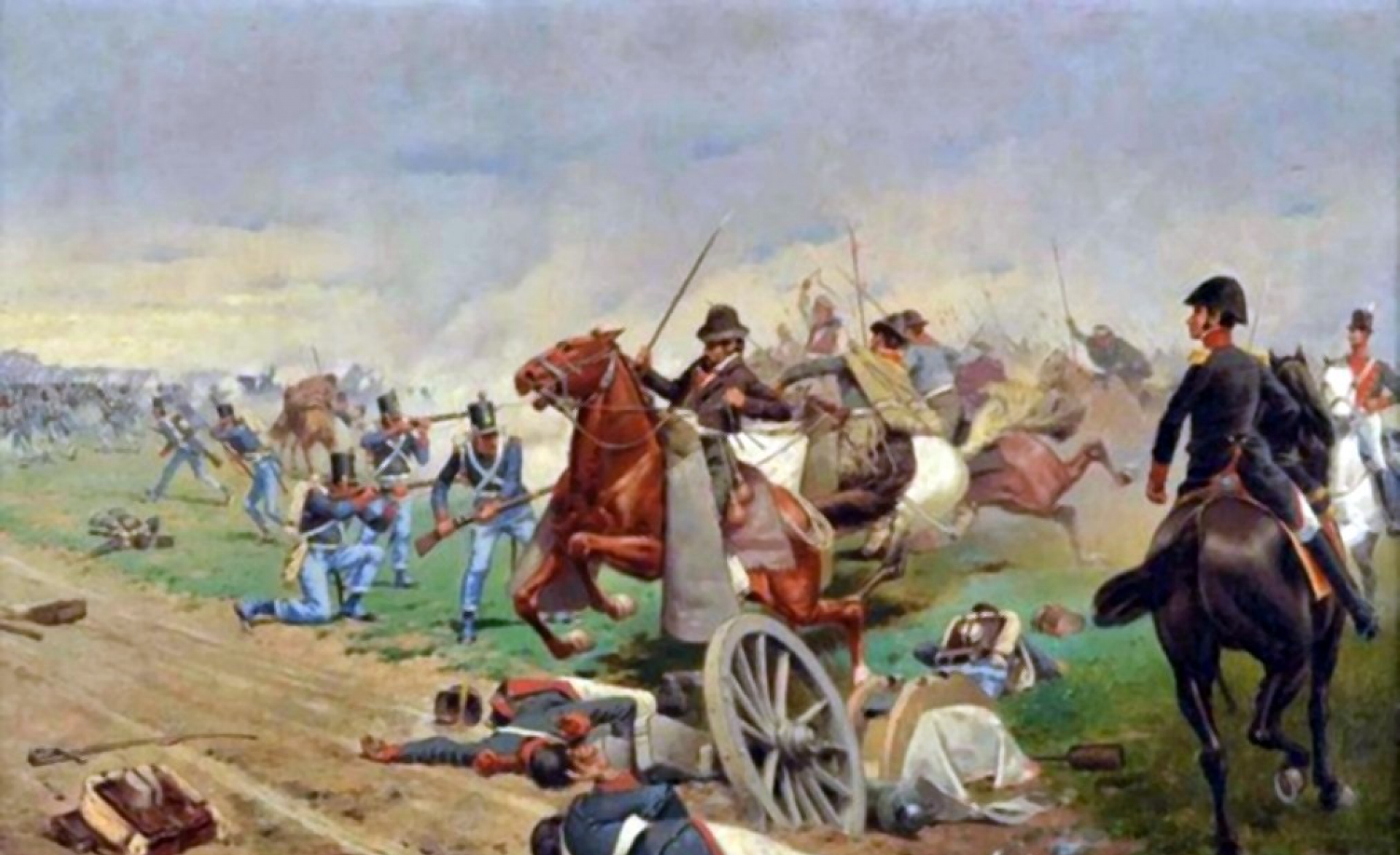
Belgrano, despite being outnumbered and having disobeyed the orders of the Triumvirate, took the risk of confronting the royalist forces. On September 24, at Campo de las Carreras, patriots and royalists engaged in an intense battle.
During the battle, which unfolded amid great confusion, various factors influenced the course of the engagement. Among these, the actions of the patriotic cavalry—composed largely of gauchos from the region—stood out; their charges helped to throw the royalist forces into disarray.
After the battle, the patriotic forces managed to capture prisoners, ammunition, and royalist flags. The victory strengthened Belgrano’s standing and boosted the morale of those who supported the revolutionary cause. In gratitude to the Virgin of Mercy, whose protection he had invoked before the battle, Belgrano proclaimed her General and Patroness of the Army and presented her with his baton of command. Days later, he sent the flags and banners captured during the battle to the Triumvirate to be displayed in their temple.
The victory at Tucumán halted the royalist advance into what is now Argentine territory and marked a turning point in the War of Independence. The triumph reaffirmed the patriots’ resolve and fueled hope that the cause of independence could be sustained.
The Battle of Tucumán was a pivotal event in the process leading up to the 1816 Declaration of Independence and consolidated the leadership of Manuel Belgrano, whose actions proved decisive at one of the most critical moments of the Revolution.
214 years after that heroic feat, we remember the commitment and courage of Belgrano, the members of the Army of the North, and all those who participated in the defense of freedom and sovereignty, leaving a fundamental legacy in the building of the Argentine nation.