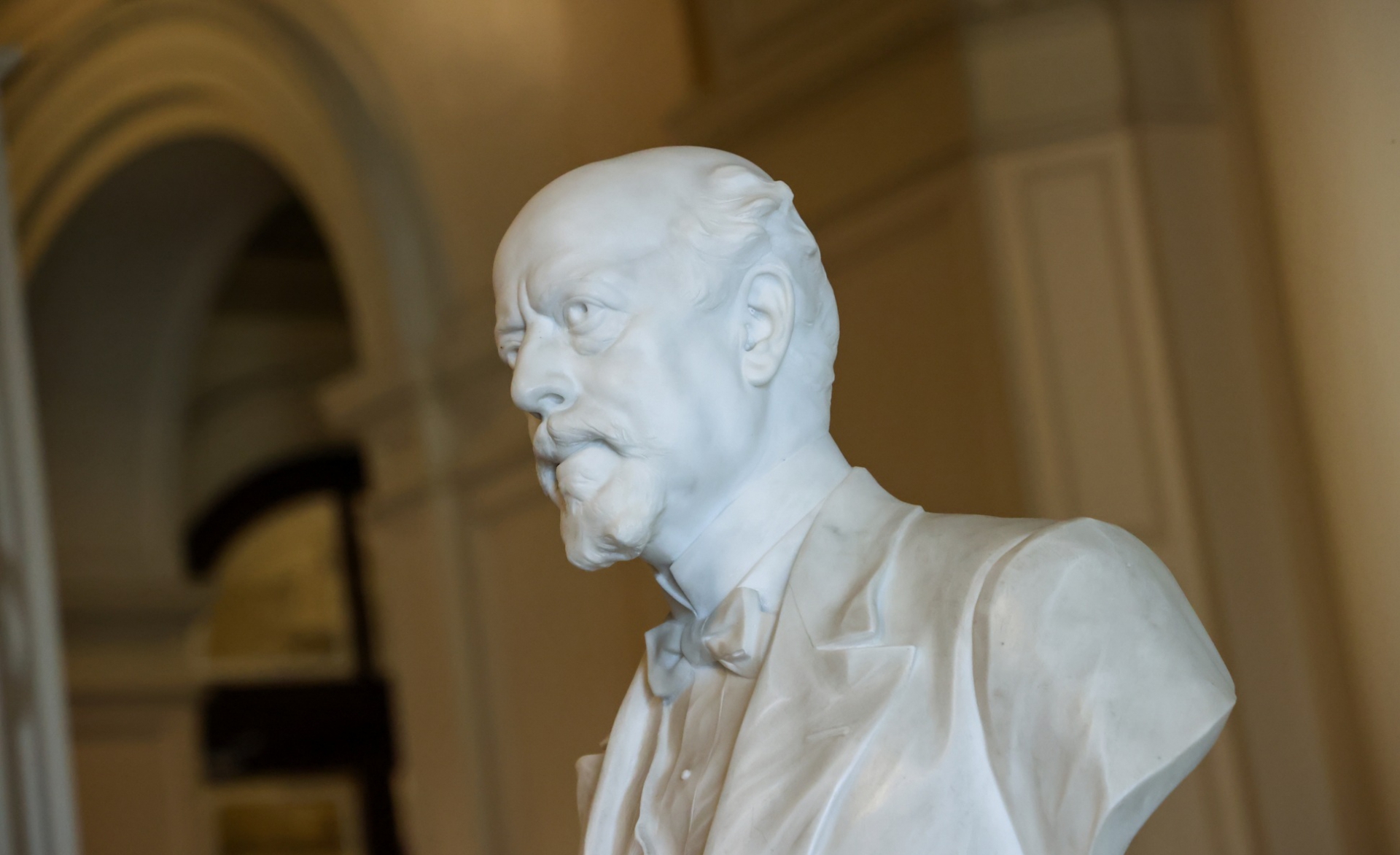
Today we commemorate the birth of Julio Argentino Roca, who served twice as President of Argentina and was one of the central figures in the process of organizing and consolidating the Argentine state during the 19th century.
Born in San Miguel de Tucumán on July 17th, 1843, Roca was the third of nine children born to José Segundo Roca and Agustina Paz. After his mother’s death, when he was 12 years old, he continued his studies at the Colegio del Uruguay in Concepción del Uruguay, where he began his military training and, at age 16, participated in the Battle of Cepeda in defense of the Argentine Confederation.
His military career unfolded during some of the major conflicts of the era. He fought in the Argentine civil wars and in the War of the Triple Alliance, rising to the rank of general at age 31. In 1879, he led the Desert Campaign, a military operation that enabled the national government to extend its control over vast territories in Patagonia and consolidate its sovereignty.
The prestige he earned during his military career led him to the presidency in 1880, as leader of the National Autonomist Party (PAN). During his first term (1880–1886), he promoted a series of reforms that shaped the country’s institutional modernization process. Notable among these were the federalization of the city of Buenos Aires, the unification of the monetary system, the expansion of the railroad network, the development of public works, the creation of new provinces and national territories, and the strengthening of public, secular, and free education.
These policies fostered territorial integration, economic growth, and Argentina’s integration into international trade, during a period characterized by a strong expansion of agricultural exports and a massive influx of immigrants.
Roca returned to the presidency in 1898 to serve a second term until 1904. During this period, he promoted new reforms aimed at modernizing the state, including the Compulsory Conscription Act (Riccheri Act), the strengthening of the Armed Forces, the creation of the War College, and the development of the Military Port. In foreign policy, he prioritized diplomatic channels to resolve border disputes with Chile, culminating in the signing of the May Pacts, which helped consolidate a period of understanding between the two countries.
During those years, measures were also implemented to strengthen Argentina’s presence in the South Atlantic and Antarctica, reaffirming the country’s sovereign claims over those strategic territories.
After completing his second term as president, Roca remained a prominent figure in national politics. His ideas, associated with the so-called Generation of ’80, influenced the country’s institutional organization and the consolidation of a centralized state model focused on administrative order and economic development.
Julio Argentino Roca died on October 19th, 1914, in Buenos Aires. More than a century later, he continues to occupy a prominent place in Argentine history, both for his contribution to the construction of the modern state and for the debates that his legacy still sparks. On March 8th, 2024, he was inducted into the Hall of Heroes at the Casa Rosada, in recognition of his role in the process of national organization.
183 years after his birth, we honor the national hero President Julio Argentino Roca. His legacy elevated our homeland, expanding our nation’s borders and fostering economic development through a liberal model.