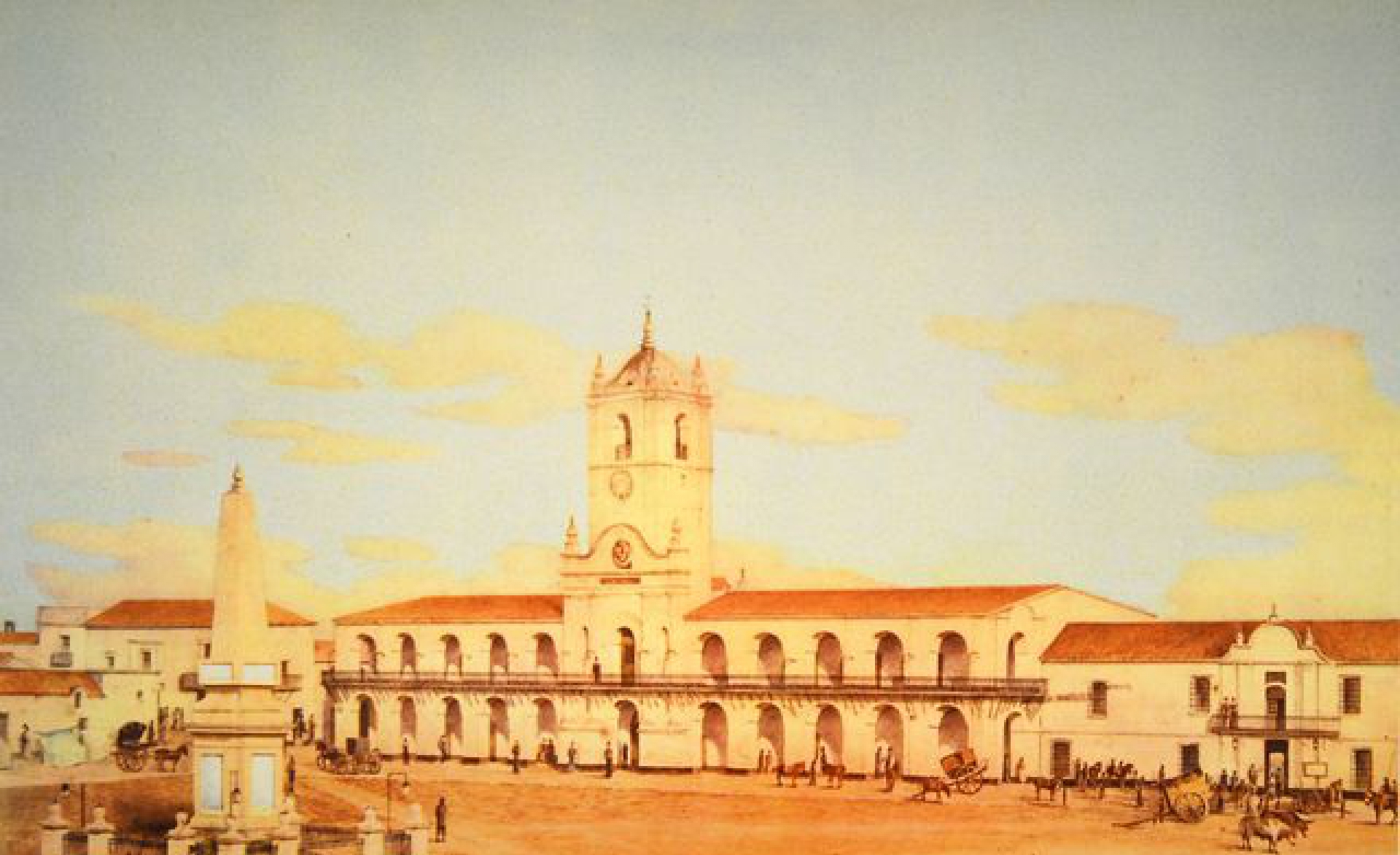
Every May 25th, Argentina commemorates one of the most momentous events in its history: the May Revolution of 1810, a political process that gave rise to the First National Government and marked the beginning of the path toward national independence.
After several days of intense debate and popular mobilization during the so-called Week of May, on May 25th, 1810, the First Government Junta was established, ousting Viceroy Baltasar Hidalgo de Cisneros and ushering in a new era in the history of the Río de la Plata.
The First Government Junta was presided over by Cornelio Saavedra and comprised Mariano Moreno and Juan José Paso as secretaries, along with Manuel Alberti, Miguel de Azcuénaga, Manuel Belgrano, Juan José Castelli, Domingo Matheu, and Juan Larrea as members.
The May events took place against an international backdrop marked by the crisis of the Spanish monarchy following the Napoleonic invasion and the capture of King Ferdinand VII. Against this backdrop, new political ideas began to emerge in Buenos Aires, centered on popular sovereignty and the right of peoples to determine their own destiny.
The participation of residents, military personnel, and Creole leaders was decisive during those days. The meetings at the Cabildo, the political discussions, and the presence of the people in Plaza de la Victoria reflected a climate of transformation that challenged the existing colonial order and paved the way for a new political process in the territory.
The May Revolution represented not only a change in leadership but also the birth of a collective will aimed at building a nation based on the ideals of freedom, representation, and autonomy.
216 years after that founding event, we remember the protagonists of May and reaffirm the historical significance of a date that remains a symbol of Argentine identity and history.