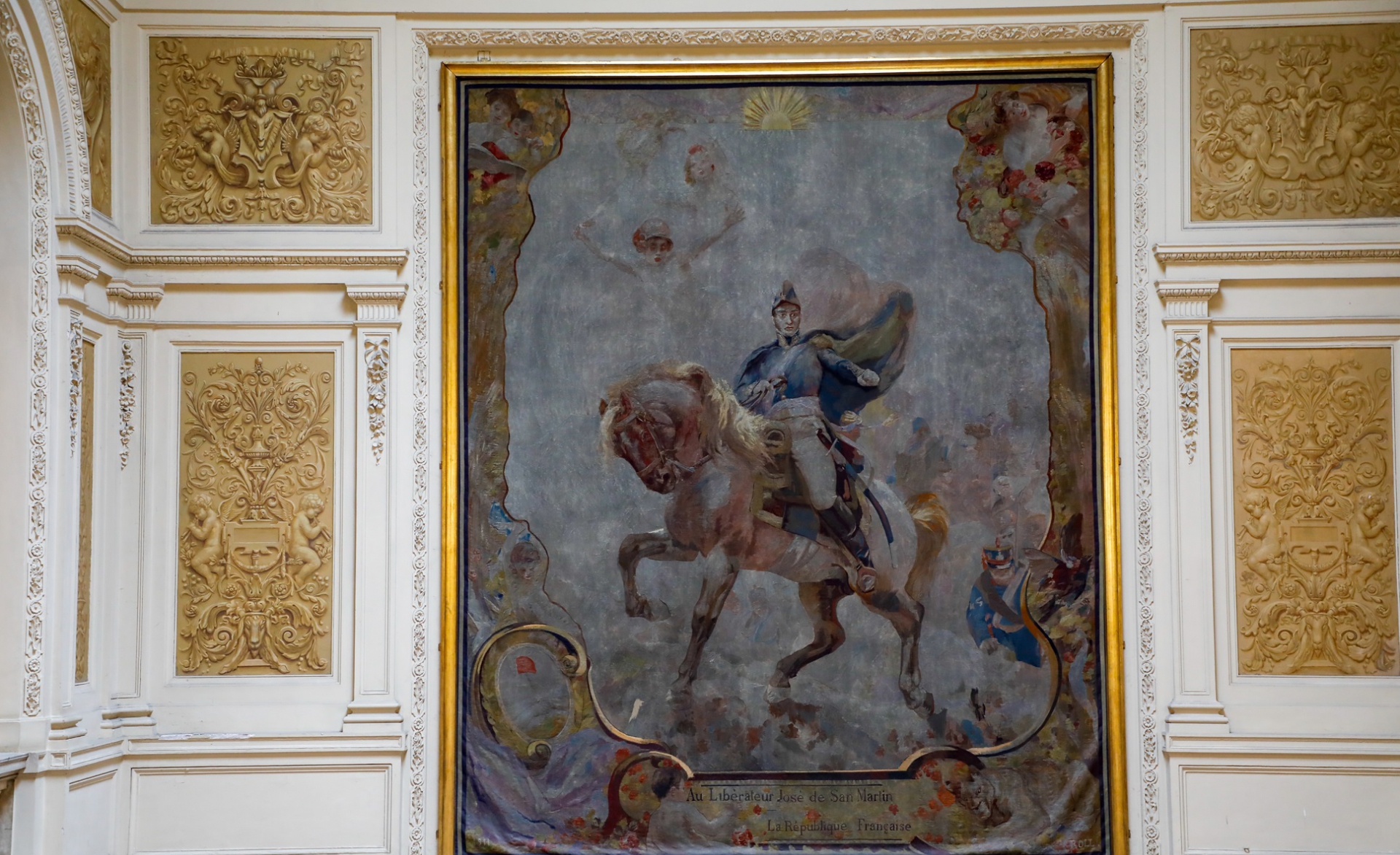
On February 25th, 1778, José Francisco de San Martín y Matorras was born in Yapeyú, now in the province of Corrientes. He was a central figure in Argentina's emancipation and played a decisive role in the independence of Chile and Peru. 248 years after his birth, Argentina remembers the Liberator as one of the fundamental pillars of the construction of the Nation.
The son of Juan de San Martín and Gregoria Matorras, and the youngest of five siblings, he began his military training in Spain after his family moved there in 1783. In 1789, he joined the Murcia Regiment and participated in various Spanish army campaigns, including the Battle of Bailén against Napoleon's troops, an action that earned him a promotion to lieutenant colonel and recognition for his performance.
In 1811, he decided to abandon his career in the royal army and travel to London with the aim of joining the American independence cause. His arrival in Buenos Aires in 1812 marked the beginning of a decisive stage: he organized the Regiment of Mounted Grenadiers and won his first victory on American soil in the Battle of San Lorenzo on February 3rd, 1813.
Convinced that the independence of the Río de la Plata depended on the defeat of royalist power in the Pacific, he devised the continental plan that would culminate in one of the greatest military feats in history: the Crossing of the Andes. In 1817, after crossing the mountain range, he achieved victory in the Battle of Chacabuco, a decisive step towards Chile's independence. He then led the expedition to Peru, proclaimed its independence in 1821, and assumed the position of Protector.
His meeting with Simón Bolívar in Guayaquil in 1822 marked the end of his public career in America. In a gesture of renunciation that defined his character, he decided to step aside to avoid divisions and preserve the unity of the emancipation process. In 1824, he went into exile in Europe with his daughter Mercedes.
He died on August 17th, 1850, in Boulogne-sur-Mer, France. His remains were repatriated in 1880 and now rest in the mausoleum of the Metropolitan Cathedral of Buenos Aires.
248 years after his birth, General José de San Martín continues to represent the values of freedom, responsibility, and commitment to the homeland. His strategic vision, austerity, and moral steadfastness established him as one of the great leaders in American history and a permanent reference point in national identity.