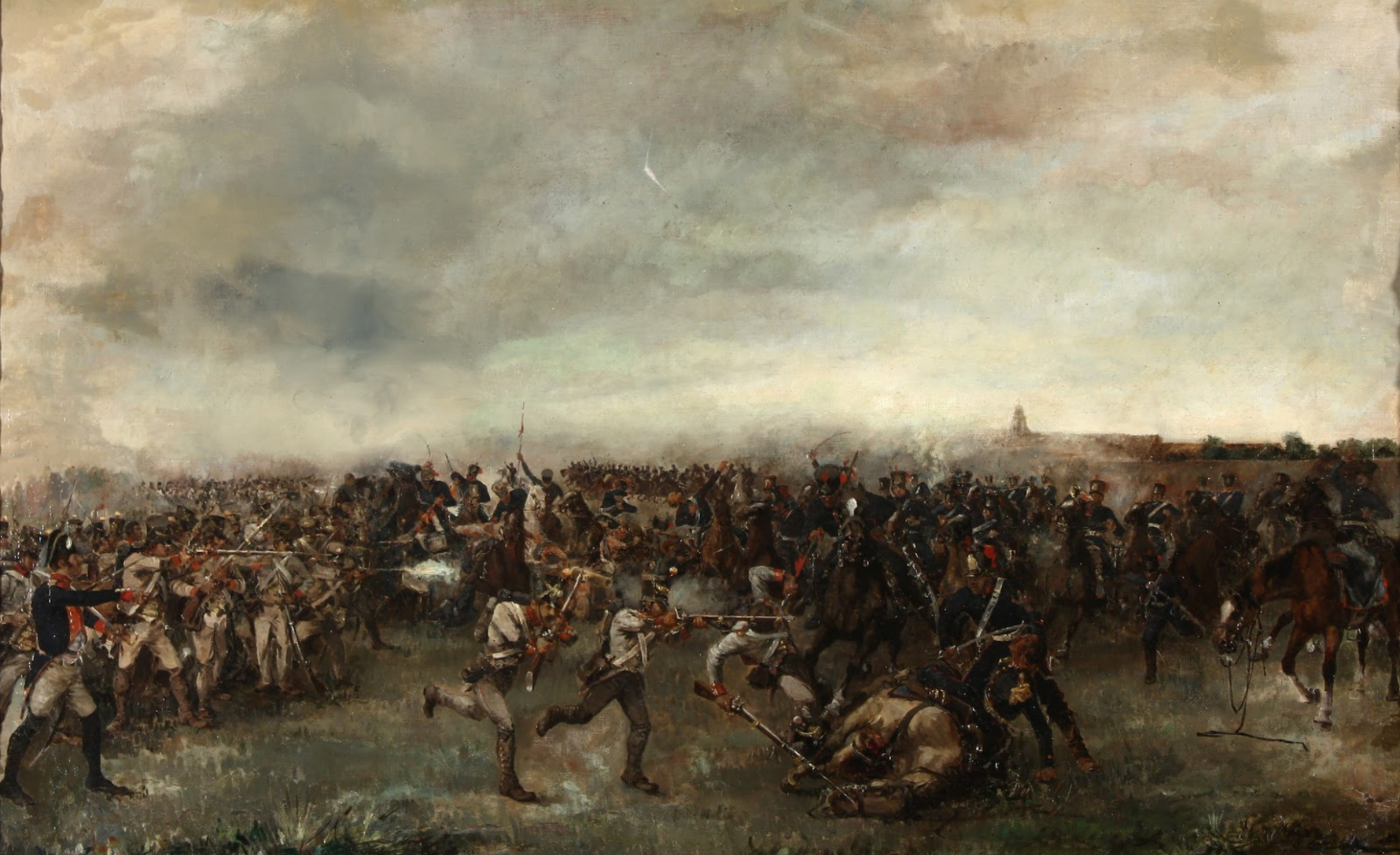
On February 3rd, 1813, the Battle of San Lorenzo took place, a brief but decisive confrontation in Argentine history, which marked the baptism of fire of the Regiment of Mounted Grenadiers and constituted the first military victory of the then Colonel José de San Martín on home soil. This year, 2026, marks the 213th anniversary of that day, which left a lasting mark on the process of independence.
The battle took place near the convent of San Carlos, in what is now the city of San Lorenzo, in the province of Santa Fe, when royalist forces from Montevideo landed with the aim of raiding the towns along the Paraná River. Faced with this threat, San Martín organized a precise and effective military operation, based on his knowledge of the terrain and careful observation of the enemy's movements.
From the convent of San Carlos, San Martín deployed his men in a pincer attack strategy that allowed them to surprise the royalist troops at the exact moment of their retreat to the ships. The confrontation lasted only a few minutes, but it succeeded in preventing further enemy incursions and secured control of a key waterway for the United Provinces of the Río de la Plata.
The Battle of San Lorenzo also remained etched in the memory of the people for the courage and dedication of its protagonists. During the action, San Martín was wounded and trapped under his horse. At that moment, grenadier Juan Bautista Cabral came to his aid and gave his life to save his commander. His heroic gesture, along with those of Juan Bautista Baigorria and Captain Justo Bermúdez, became a symbol of sacrifice and loyalty to the ideal of freedom.
Beyond its immediate military importance, the victory at San Lorenzo foreshadowed San Martín's strategic ability and was the beginning of a campaign that would culminate in the emancipation of much of South America. The battle consolidated a vision of territorial defense based on organization, discipline, and commitment to the cause of independence.
213 years after that event, the Battle of San Lorenzo remains a symbol of the courage, dedication, and commitment to service of those who fought for independence. Its memory invites us to reflect on the founding values of the nation and to pay tribute to those who, with sacrifice and bravery, forged the path to freedom.